Near-extinction of the sea people
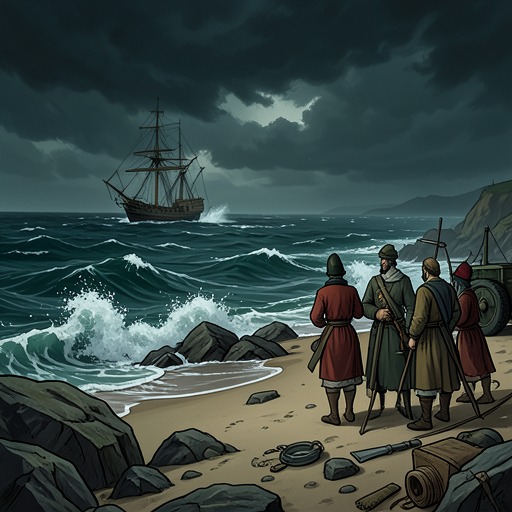
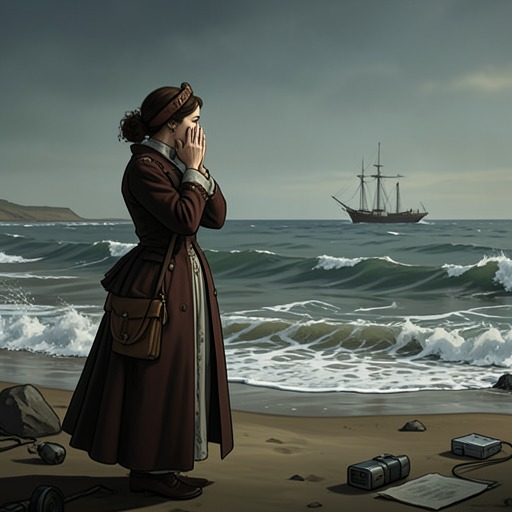
The Moon and the SunThe near-extinction of the Sea People turns survival into a collective constraint: the threat is not only that their numbers have dwindled, but that another human assault could overwhelm those who remain. Near the novel’s close, this danger changes when and how they gather, making a cherished communal custom something they can no longer safely practice in daylight.
Recognition and persecution
When Pope Innocent acknowledges that the Sea People are people, rather than accepting their treatment as monsters, the admission unsettles the authority it might otherwise protect. Yves de la Croix tells him that the Sea People are nearly extinct because of the Catholic Church and argues that the Church’s response should have been to offer them its faith, not to help bring them to this condition. The accusation is Yves’s, but the scene makes the institution’s responsibility for their peril explicit; the Pope’s agreement that they are people does not erase the consequences of earlier persecution.
The novel places this denial of personhood beside human struggles over freedom and status without equating their circumstances. Marie-Josèphe de la Croix tells Odelette that she will free her and calls her a sister, rejecting the idea that Odelette should remain anyone’s slave. Odelette explains that Marie-Josèphe had not asked before; Marie-Josèphe admits that living in the same house and sharing food had allowed her to overlook the difference in their legal positions. She had also feared that freedom without resources, protection, or family would leave Odelette exposed. The exchange sharpens the stakes of naming a being as a person: affection alone does not undo a structure that leaves someone vulnerable.
A shrinking margin of safety
At the later gathering, the Sea People’s relatives swim toward the deep ocean trench where the mating haze takes place. Sherzad anticipates being welcomed back by the other families, who will greet her child, while the children play with tame giant octopuses and tease dolphins. The adults will join the mating haze, which will briefly ease their grief. These details show a community still capable of welcome, play, and shared pleasure, but whose gathering takes place under the pressure of loss.
The survivors can no longer risk mating beneath the sun. They are too vulnerable to human attackers, and too few remain to withstand another assault. The change is practical and collective: daylight, once part of the gathering’s conditions, has become a danger they cannot afford. The narrative gives no number for those lost; instead, it measures scarcity by what the survivors can no longer safely risk.
The altered gathering
This year, Midsummer Night coincides with the dark of the moon. The Sea People will gather at sunset and dare to rise together to the surface in moonless darkness. There, among the waves, they will whisper songs and bathe in luminescence; their bodies will glow as they come together for the brief bliss of the mating haze. The darkness offers a narrow opportunity, not a restoration of safety: the gathering is still a risk, undertaken because the timing gives them a chance to meet.
The next such gathering will not occur for fourteen years, when the dark of the moon again coincides with Midsummer Night. That interval gives the scene its weight. The Sea People retain their communal customs and look toward a future generation, but their ability to practice those customs has been reduced to a rare alignment of season and moon. Their near-extinction is thus registered not only in the threat of another assault, but in the long wait imposed on collective life.